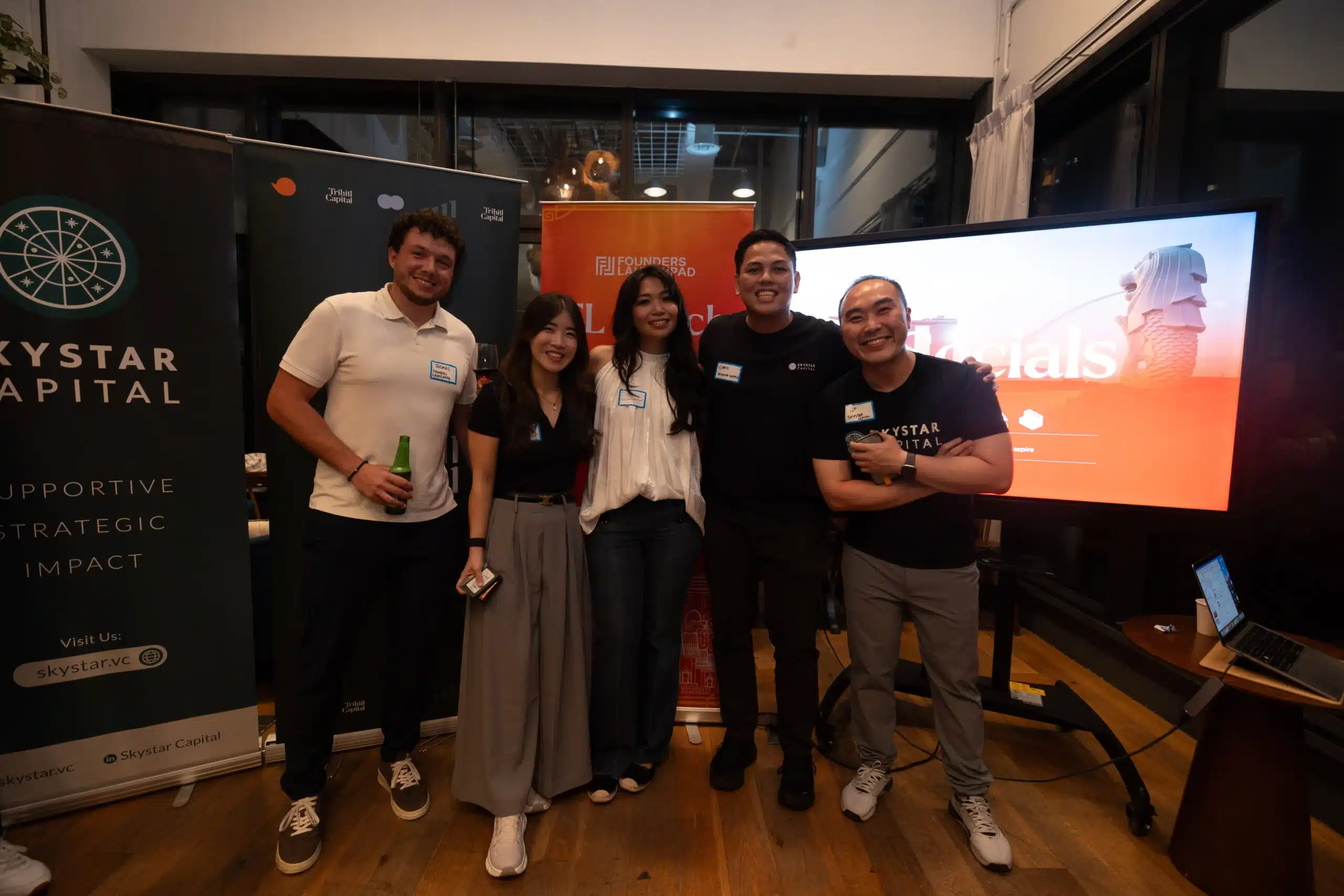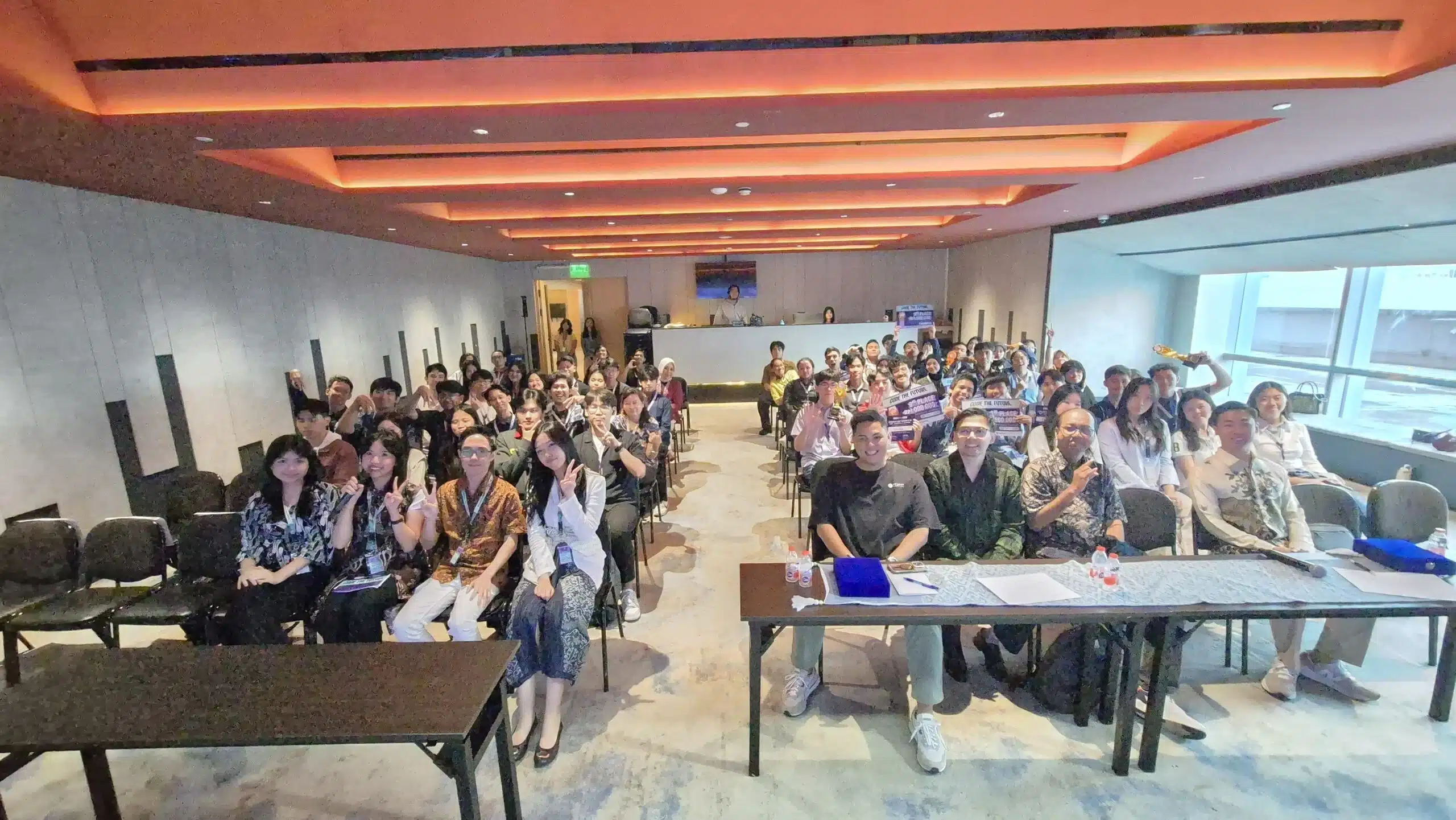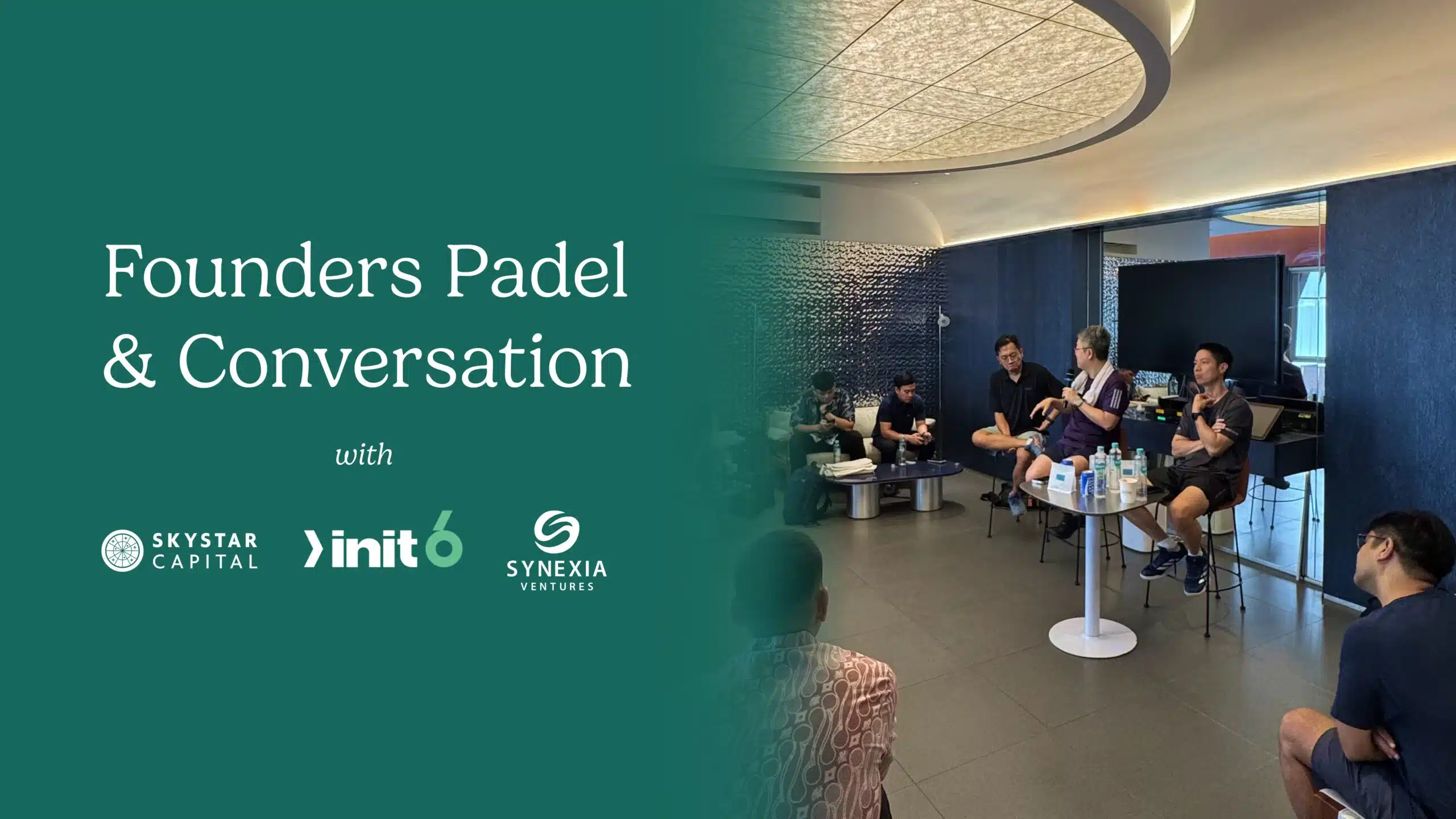
Jakarta, November 12th, 2026. Padel Founders, a community that brings founders and investors together through the sport, hosted a morning session in South Jakarta for around 10 founders and a group of venture capital investors. The program started at 6 a.m. with two hours of padel, followed by a one hour sharing session on building companies in a tighter funding environment.
The format was relaxed, with no stage and no presentations. Skystar Capital, Init-6 and Synexia Ventures were invited to share their perspectives with the founders in an open and friendly discussion.
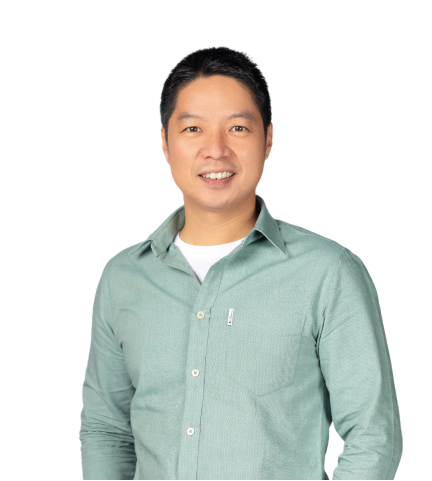
Representing Skystar Capital was Abraham Hidayat, Managing Partner and co-founder of the firm since its founding in 2014. Abraham began his career as a software developer before moving into investment. He has invested in almost 70 companies, exited more than 10, and holds an MBA from INSEAD.
He was joined by Kuan Hsu, Managing Director of Synexia Ventures, a Singapore based investment platform jointly created by NTT DOCOMO Ventures and NTT Finance. Kuan is also a General Partner at KK Fund. Before venture capital, he worked at McKinsey & Company and Goldman Sachs, executed private equity deals at Temasek Holdings, and led GREE Ventures’ Southeast Asia operations.
The discussion was guided by Achmad Zaky, co-founder and former CEO of Bukalapak, one of Indonesia’s largest e-commerce platforms. Zaky is now Founding Partner of Init-6, the venture capital firm he established in 2020 with Bukalapak co-founder Nugroho Herucahyono. Together with the Achmad Zaky Foundation, Init-6 has backed more than 50 companies.
Focus on What You Can Control
Abraham opened with something personal. Many people in the room built their careers during years of strong optimism about Indonesia, and the past couple of years have felt different. He admitted he spent time feeling down about it before his outlook changed.
“As enterprising people, we can always continue to be sad and complain, but there are a lot of things that are outside of our control,” he said. “There are things which are within our control. Our businesses, our colleagues.“
His message to the founders was to look forward. The country is still big and full of opportunity, and the people in the room, many of them tech company alumni, already have the skills and networks to find it.
Kuan added his own experience. At KK Fund, he spent close to two years trying to raise a new fund and heard no again and again. He also had to admit he knew little about AI and deep tech and go back to study. “My message is, you adapt,” he said.
What Investors Look For Now
When Zaky asked how a successful business should be defined today, both panelists came back to the basics.
“Previously we were just chasing growth, chasing revenue. Now it’s more about the ability to make profit,” Abraham said. “It doesn’t mean you have to be profitable now, but you have to convince us that the business is worth doing. Founders need good gross margins, reasonable operating costs, and a clear answer to when and how they will become profitable.” He also explained that LPs still believe in Indonesia but no longer want to wait ten years for returns.
Kuan put it more simply. “What is business? Make money. Profit, cash flow,” he said. “Maybe they’re still profitable, but no cash flow, you die.” In his view the fundamentals never changed. What changed are investor expectations, now that capital can find faster and more liquid returns elsewhere.
Real Product Market Fit
Abraham shared a simple test for product market fit. “If you sell something, people are willing to pay you more than your cost of producing the service or the goods. If you’re subsidizing, there’s no product market fit.“
He believes many startups failed because money was too easy. Founders building now should treat their current funding as all they will ever have. “If you have that mindset, I think you’re already ahead,” he said. Companies that learn to build with minimal resources will be in a much stronger position once bigger capital becomes available again.
Kuan offered a different angle on mistakes. AI has made experiments far cheaper, so founders can test several business models early without hiring a large team. “As early as you can, experiment as much as possible, because that’s still where you are allowed to make mistakes,” he said. Once a company reaches Series A or B, the tolerance for mistakes is much lower.
He also reminded founders that a good story still matters, as long as it reaches the right audience. A stable, cash generating business may be a better fit for private equity or infrastructure investors than for a typical VC.
Trading Freedom for Resources
One of the most talked about moments came when Kuan spoke about survival. In Asia, he said, founders who fail rarely get the second chances common in the US. Sometimes the smart move is to stop sailing alone for a while.
“Maybe I could be part of an aircraft carrier, a much bigger organization,” he said. He pointed to his own role at Synexia, a joint venture with NTT, where he can still call his own shots while having access to a larger group’s resources. “I give up some freedom, but you know what? That made me survive.“
A Little Bit of Luck
Zaky closed with a story from Bukalapak’s early days. At one point the company was months away from running out of money after nearly every major investor turned it down. A Microsoft investment came through unexpectedly, and years later the IPO drew so much demand that the raise grew from US300 million to US1.5 billion.
“Something we expect to succeed sometimes doesn’t, and the other way around,” he said. “Maybe 50% is luck.” His advice was to focus on what you are good at and passionate about, and keep going.
Kuan had the last word. “If it’s within your control, then don’t worry. If it’s outside your control, relax. Just do what you can.“
The session ended with founders and investors staying on to continue the conversation over coffee. Skystar Capital thanks Padel Founders for the invitation and looks forward to joining more sessions that bring founders and investors closer together.
About Skystar Capital
Skystar Capital is a venture capital firm that backs founders in Indonesia and Southeast Asia. Beyond capital, Skystar supports its portfolio with industry expertise, strategic networks and institutional tools. The firm manages more than 60 investments across sectors including fintech, edtech, healthtech, proptech, logistics and web3. For more information, visit www.skystar.vc.
Media Contact
Christopher Josua
Head of Communications and Partnerships
Skystar Capital
+62817613011